Virtual Assistant Services: Skills, Clients & Profitable Offers

Mastering Virtual Assistant Services: A Practical Guide to Skills, Clients, and a Profitable VA Business
A virtual assistant business is no longer “extra help” work—it’s a real operations partner for founders, teams, and busy professionals who need consistent execution. The fastest path to stable income is choosing services that match demand, packaging them into outcomes clients can picture, and running a simple delivery system that keeps communication clear and turnaround predictable.
What a Virtual Assistant Business Looks Like Today
Most VAs earn through a mix of hourly work (easy to start), monthly retainers (steady), project packages (clear scope), and specialized “done-for-you” services (higher value). Clients range from solopreneurs and coaches to ecommerce stores, agencies, SaaS startups, authors, real estate teams, and executives—anyone who needs consistent follow-through without hiring full-time.
What clients actually buy is the result: time saved, fewer dropped balls, smoother launches, a cleaner pipeline, or faster customer responses. That’s why a specialist VA often commands higher rates than a generalist. Generalists are valuable when a client needs broad admin coverage; specialists shine when a business wants one process owned end-to-end (support, content ops, email marketing ops, project coordination, or automation).
Clear boundaries protect both sides. VAs can handle administrative and operational execution, but legal advice, tax filing, advanced engineering, and complex accounting should be referred out. For business setup guidance and sales fundamentals, the U.S. Small Business Administration is a solid starting point.
Services to Offer (and How to Choose a Profitable Lane)
Choosing services gets easier with three filters: market demand (people already pay for it), personal strengths (you can deliver confidently), and repeatability (it can be systemized). High-demand categories include inbox/calendar, travel planning, customer support, bookkeeping prep, social scheduling, content operations, CRM updates, basic design, podcast support, ecommerce listings, research, and SOP creation.
Specialized lanes that often pay more include executive assistance, launch support, community management, email marketing operations, project management, and basic automation setup. The key is turning vague tasks into clear deliverables. “Weekly inbox zero plus a priority list” is easier to buy (and measure) than “email management.” Start with a narrow service menu, then expand once revenue is consistent and your workflows are proven.
Examples of VA Services, Tools, and Deliverables
| Service | Typical Tools | Clear Deliverable | Best-Fit Client Type |
|---|---|---|---|
| Inbox & calendar management | Gmail/Outlook, Google Calendar/Calendly | Daily triage + flagged priority list + booked meetings | Executives, coaches, consultants |
| Customer support operations | Help Scout/Zendesk, Shopify, templates | Response within SLA + weekly tag/report summary | Ecommerce, SaaS, memberships |
| Content repurposing & scheduling | Canva, Buffer/Later, Google Drive | 10 posts/week scheduled + asset folder organized | Creators, agencies, local brands |
| CRM & pipeline upkeep | HubSpot, Airtable, Notion | Updated deals + next steps + follow-up reminders | Sales-driven service businesses |
| Project coordination | Asana/Trello, Slack, SOPs | Weekly status report + deadlines tracked + blockers flagged | Teams with contractors or launches |
Core Skills That Make Clients Stay
Clients stay when they trust communication and consistency. Strong VAs send concise updates, confirm priorities, and set expectations early (“I’ll deliver X by Thursday 2pm ET, and I need Y access today”). Organization matters just as much: naming conventions, clean folders, and one “single source of truth” hub (Notion, Google Drive, or Airtable) prevents confusion.
Problem-solving elevates you quickly. Instead of forwarding questions, present two options with trade-offs and a recommendation. Pair that with confidentiality habits—password managers, least-privilege access, secure sharing—and you become safe to delegate to. Quality control (checklists, templates, SOPs) is what makes your work feel professional at scale. Finally, adopt a basic analytics mindset: track response time, turnaround, and capacity so you can say “yes” confidently—or propose a better timeline.
Set Up Your VA Business: Offers, Pricing, and Simple Systems
Start with an offer structure that matches your season of business. Hourly is fastest to launch, but retainers stabilize income and planning. Packages are ideal when you can define outcomes clearly (for example, “weekly customer support coverage” or “content scheduling system setup”).
Pricing should account for non-billable admin time, software, taxes, and the ramp-up curve on new tools. Many VAs raise rates fastest by increasing scope clarity and proof (before/after metrics, testimonials, and documented workflows). For tax considerations and self-employment basics, the IRS Self-Employed Individuals Tax Center is a helpful reference.
Find Clients Without Feeling Salesy
Pick two primary channels for 60 days so momentum compounds: referrals, LinkedIn, niche Facebook groups, job boards, cold outreach, partnerships with agencies, or local business networks. If you want a built-in place to list services, LinkedIn’s marketplace options are worth reviewing at the LinkedIn Help Center overview.
Deliver Results: Workflows, SOPs, and Client Communication
Grow Profitably: Specialize, Package, and Scale
Tools to Help You Move Faster
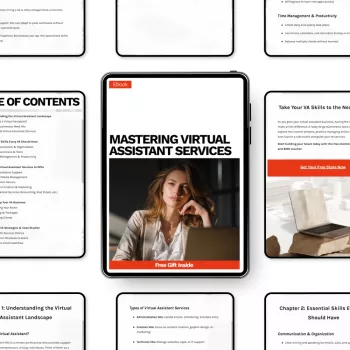
- Mastering Virtual Assistant Services – Practical eBook Guide to Virtual Assistant Services to Offer, Build Skills, Find Clients & Grow a Profitable VA Business
- AI-Powered Product Review Checklist | Digital Download for Sellers & Creators | AI for Writing Product Reviews Guide
- Calm in the Moment Checklist
FAQ
What virtual assistant services are easiest to start with?
Inbox/calendar support, scheduling, research, data entry, and basic customer support are usually the quickest to launch with minimal tools. Pick 1–2 core offers first, document your steps, and add services only after delivery feels repeatable.
How should a virtual assistant price services?
Hourly pricing is simple, retainers create steady income, and packages sell best when outcomes are clear. Base rates on your experience, scope, turnaround time, and non-billable admin time, then raise prices as you build proof and tighter systems.
How can a new VA find the first clients quickly?
In 30 days, build a one-page services + outcomes sheet, message your warm network, and send 20 targeted outreach notes per week to businesses with a clear need. Offer a small pilot package, then follow up with a helpful example deliverable and a specific start date.















Leave a comment